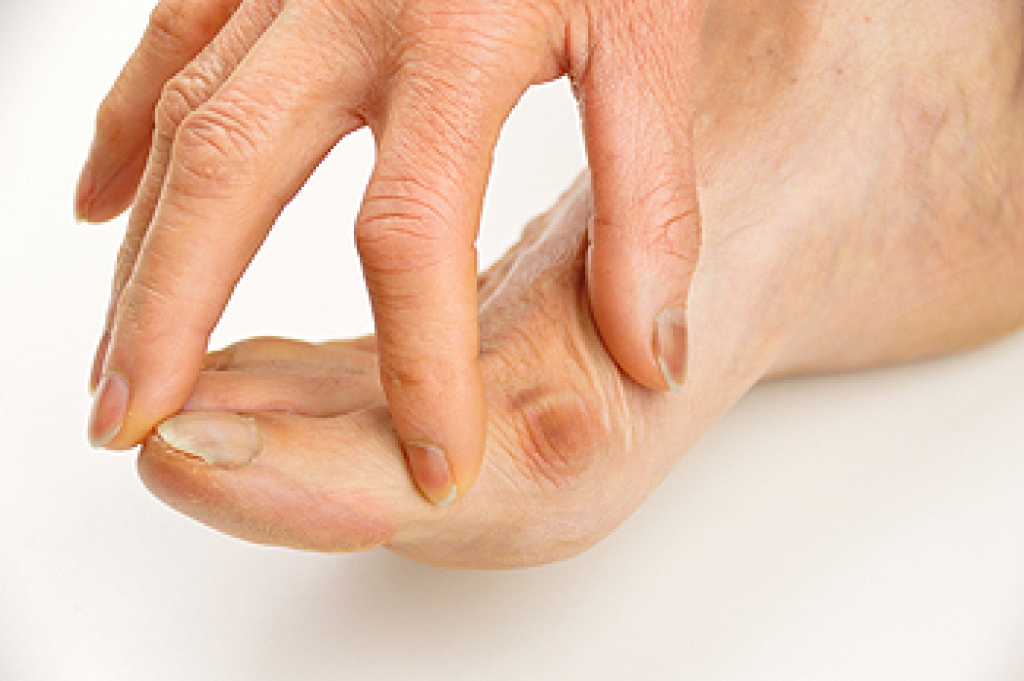
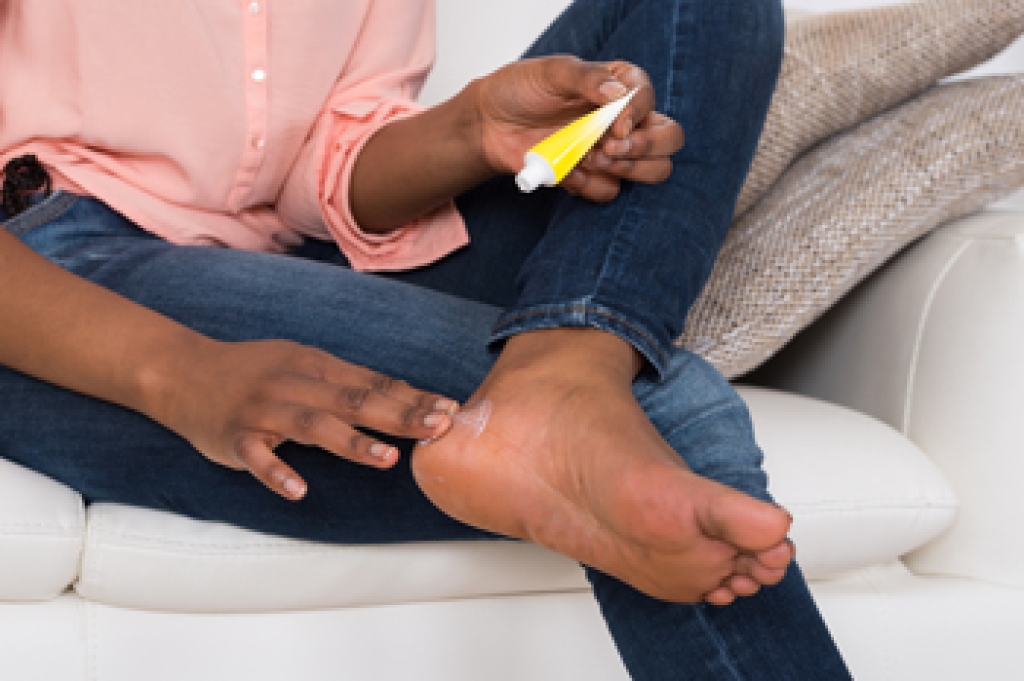
 The medical term for cracked heels can be referred to as heel fissures. They are defined as cracks in the outer edge of the heel that can be a result of dry skin. This can occur from wearing shoes that have an open back, or from standing on hard surfaces for the majority of the day. This condition can cause pain and discomfort, and in severe cases, bleeding may occur. There are many patients who find mild relief when the feet are soaked in warm water, followed by applying a good moisturizer. Additionally, a pumice stone may be used that can help to remove dead skin. Ignoring cracked heels can lead to fissures and increased risk of infection. For that reason, it is suggested that you consult a podiatrist who is able to offer safe treatment and suggest prevention techniques.
If the skin on your feet starts to crack, you may want to see a podiatrist to find treatment. If you have any concerns, contact Carrie Frame, DPM from West Virginia Foot & Ankle. Our doctor can provide the care you need to keep you pain-free and on your feet.
Cracked Heels
It is important to moisturize your cracked heels in order to prevent pain, bleeding, and infection. The reason cracked heels form is because the skin on the foot is too dry to support the immense pressure placed on them. When the foot expands, the dry skin on the foot begins to split.
Ways to Help Heal Them
- Invest in a good foot cream
- Try Using Petroleum Jelly
- Ease up on Soaps
- Drink Plenty of Water
Ways to Prevent Cracked Heels
- Moisturize After Showering
- Skip a Shower
- Keep Shower Water Lukewarm
- Don’t Scrub Your Feet
If you are unsure how to proceed in treating cracked heels, seek guidance from a podiatrist. Your doctor will help you with any questions or information you may need.
If you have any questions, please feel free to contact our office located in Charleston, WV . We offer the newest diagnostic and treatment technologies for all your foot care needs.