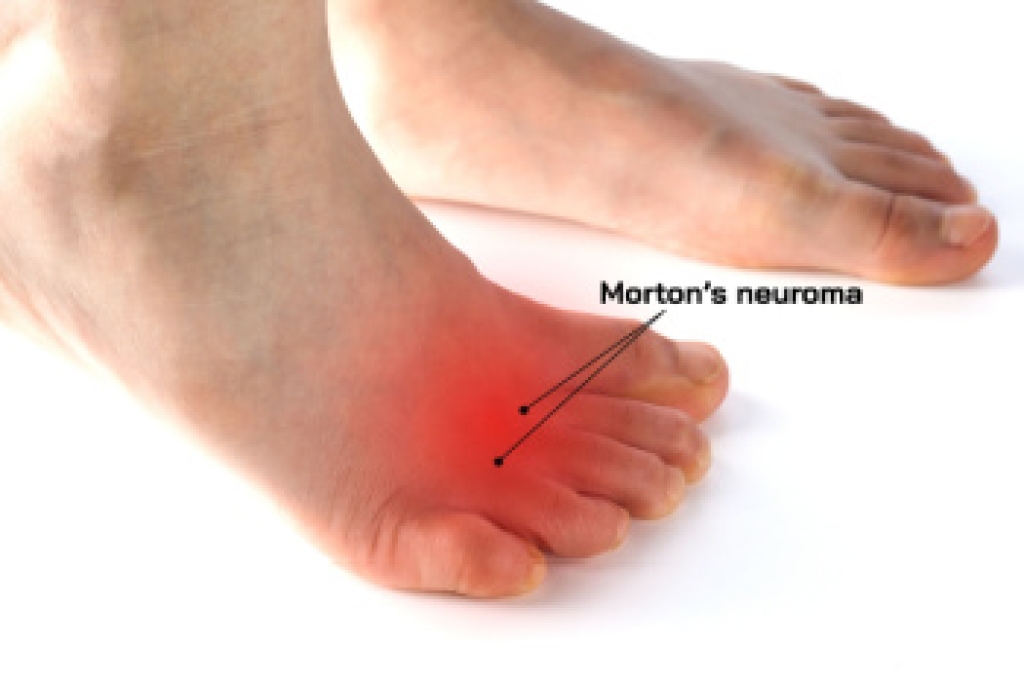
Morton's neuroma develops when tissue surrounding a nerve in the ball of the foot becomes thickened and irritated. It most often affects the space between the third and fourth toes, though other areas may be involved. The nerve becomes sensitive to pressure, causing discomfort during walking. Tight shoes and high heels may increase pressure across the front of the foot, making symptoms more noticeable. Repeated stress on the forefoot may also contribute to irritation. Despite its name, Morton's neuroma is not a cancerous growth. Instead, it involves changes in the tissue around a nerve. The condition may develop gradually, with discomfort becoming more frequent. Understanding where the irritation occurs helps explain why the pain is often felt near the toes rather than the entire foot.
People with Morton's neuroma often describe burning or sharp pain in the ball of the foot. Some experience tingling or numbness extending into nearby toes. Others report feeling as though a small pebble is trapped inside their shoe, even when nothing is there. Symptoms may become worse while walking or wearing narrow footwear that squeezes the forefoot. In some cases, discomfort improves temporarily before returning with activity. The affected area usually does not show obvious swelling or changes in appearance, which can make the problem difficult to recognize. Pain may cause a person to shift weight away from the sensitive area, changing how the foot moves during each step. Because similar symptoms can arise from other foot problems, identifying the exact source of irritation is important. Persistent forefoot pain requires attention, especially when it limits daily activities.
A podiatrist evaluates suspected Morton's neuroma by reviewing symptoms and examining the ball of the foot. The examination may involve gently pressing between the toes to locate tenderness and reproduce familiar discomfort. Imaging may be considered when the diagnosis is unclear or another problem needs to be ruled out. Treatment focuses on reducing pressure around the irritated nerve and improving walking comfort. Depending on the findings, a podiatrist may recommend shoes with a wider toe box, specially placed padding, or orthotic inserts. Additional treatment options may be discussed when symptoms continue despite these measures. The approach depends on the severity of pain and how it affects movement. If you are experiencing persistent burning, tingling, or pain in the ball of your foot, it is suggested that you consult a podiatrist for an evaluation and appropriate treatment options.
Morton’s neuroma is a very uncomfortable condition to live with. If you think you have Morton’s neuroma, contact Carrie Frame, DPM of West Virginia Foot & Ankle. Our doctor will attend to all of your foot care needs and answer any of your related questions.
Morton’s Neuroma
Morton's neuroma is a painful foot condition that commonly affects the areas between the second and third or third and fourth toe, although other areas of the foot are also susceptible. Morton’s neuroma is caused by an inflamed nerve in the foot that is being squeezed and aggravated by surrounding bones.
What Increases the Chances of Having Morton’s Neuroma?
- Ill-fitting high heels or shoes that add pressure to the toe or foot
- Jogging, running or any sport that involves constant impact to the foot
- Flat feet, bunions, and any other foot deformities
Morton’s neuroma is a very treatable condition. Orthotics and shoe inserts can often be used to alleviate the pain on the forefront of the feet. In more severe cases, corticosteroids can also be prescribed. In order to figure out the best treatment for your neuroma, it’s recommended to seek the care of a podiatrist who can diagnose your condition and provide different treatment options.
If you have any questions, please feel free to contact our office located in Charleston, WV . We offer the newest diagnostic and treatment technologies for all your foot care needs.
